

Archive pack specs
Archive pack specs sets out the storage details, labels and supporting information needed to keep archived artwork usable.

Archive pack file requirements
Archive pack specs sets out the practical details for storing artwork, print references and supporting job information. Use it to confirm formats, labelling and the pieces that need to stay with each archived set.
Archive pack specs records what must stay in each retained set after a job closes. Include final artwork files, approved print references, job codes and any version notes that explain changes made during production. Storage conditions matter in South Africa, especially where heat, dust or coastal humidity can affect labels, sleeves and sample prints.
Begin the pack with the approved visual reference and the latest dated sign-off. Then place supporting notes with the physical sample or printed swatch so the next buyer, studio lead or printer can trace exactly what was used. Missing reference pieces often cause the archive to lose value long before the files are outdated.
What stays in the archive
Each archive pack should hold the working facts needed to reprint, check colour or confirm an older job. That usually means labelled artwork, print specs, substrate notes, supplier references and one clear contact trail linked to the order. Keep naming consistent across folders, cartons and sample pockets to avoid duplicate versions.
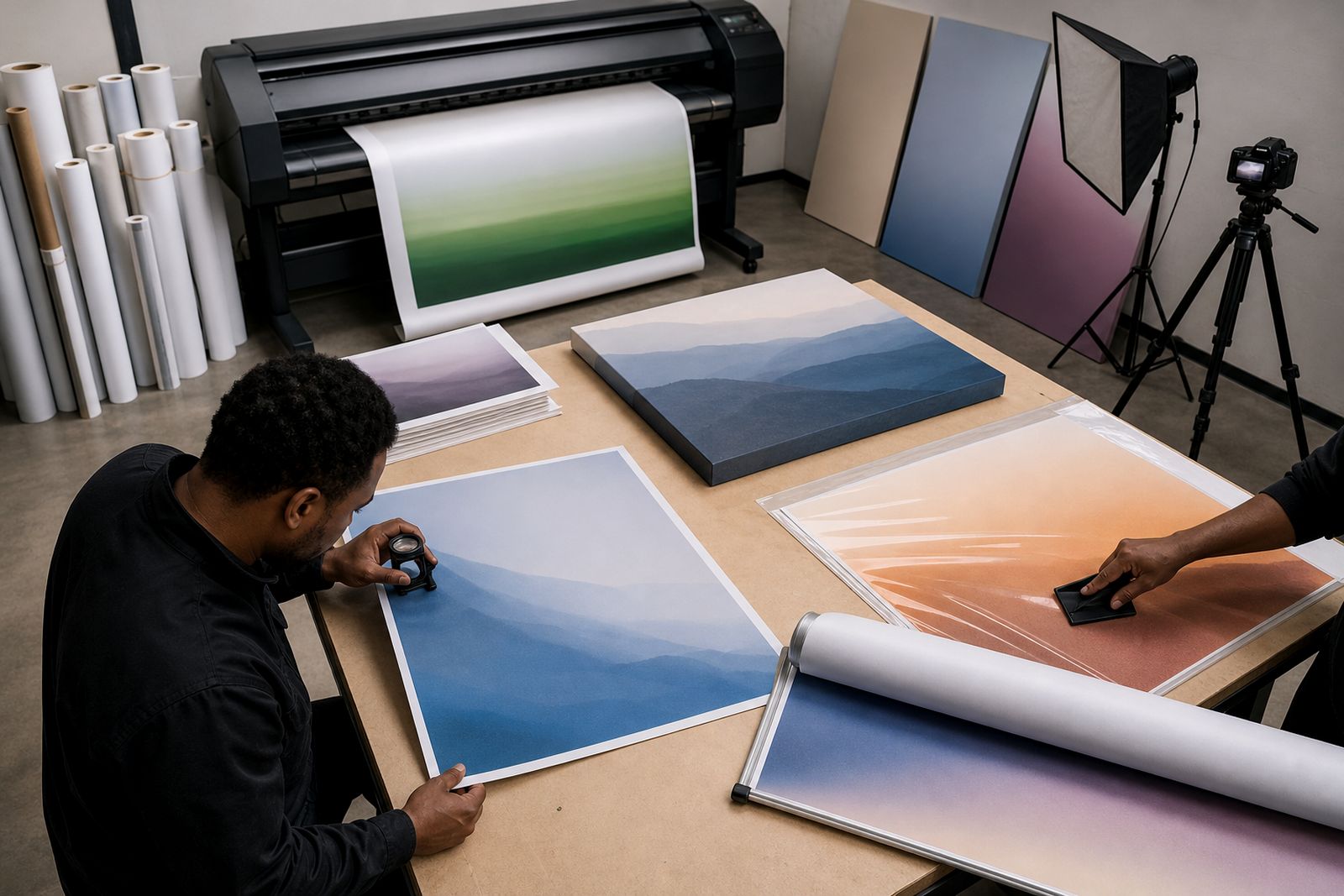
Cross-check archive pack specs against the final print pack and any image set before storage. Use the same job name on the carton label, digital folder and handover sheet so records match later. Imaging work is planned from the finished size, the number of pieces and where each print will hang.
- Final artwork saved with version date
- Approved print sample kept with notes
- Job codes listed on each label
Storage checks for South African conditions
Archive material should be packed for the place where it will be kept, not only where it was produced. Inland sites often need dust protection for swatches and loose proofs, while coastal storage benefits from sealed sleeves and moisture-aware labelling. Branch roll-outs also need a clear location record when duplicate packs sit in Johannesburg, Durban or Cape Town.
Paper references fade, curl or pick up marks if they are left loose in hot storerooms or receiving bays. Add date stamps, reprint notes and substrate details before filing so the sample still makes sense months later. Where power cuts interrupt proofing, note which version was approved and whether the physical sample or digital file was the final authority.
Archive pack briefing details
State the job name, version date, print method and which pieces must be retained physically. Add any past issue that should be traceable later, such as colour shifts, swapped stock or corrected dimensions.
Record who approved the set and which files match the stored sample. File this sheet with the source artwork, print references and purchase record when procurement or studio teams need to verify an older run.
What our Imaging and Print customers say
Verified Google reviews
Also worth a look



Tell us about your image job
Send a note through our contact form with what the images are for, the print sizes or channels, the media and finish you have in mind, how many pieces and your area, and we will come back with practical options and a quote.
Open the contact form